Back to Prompt Library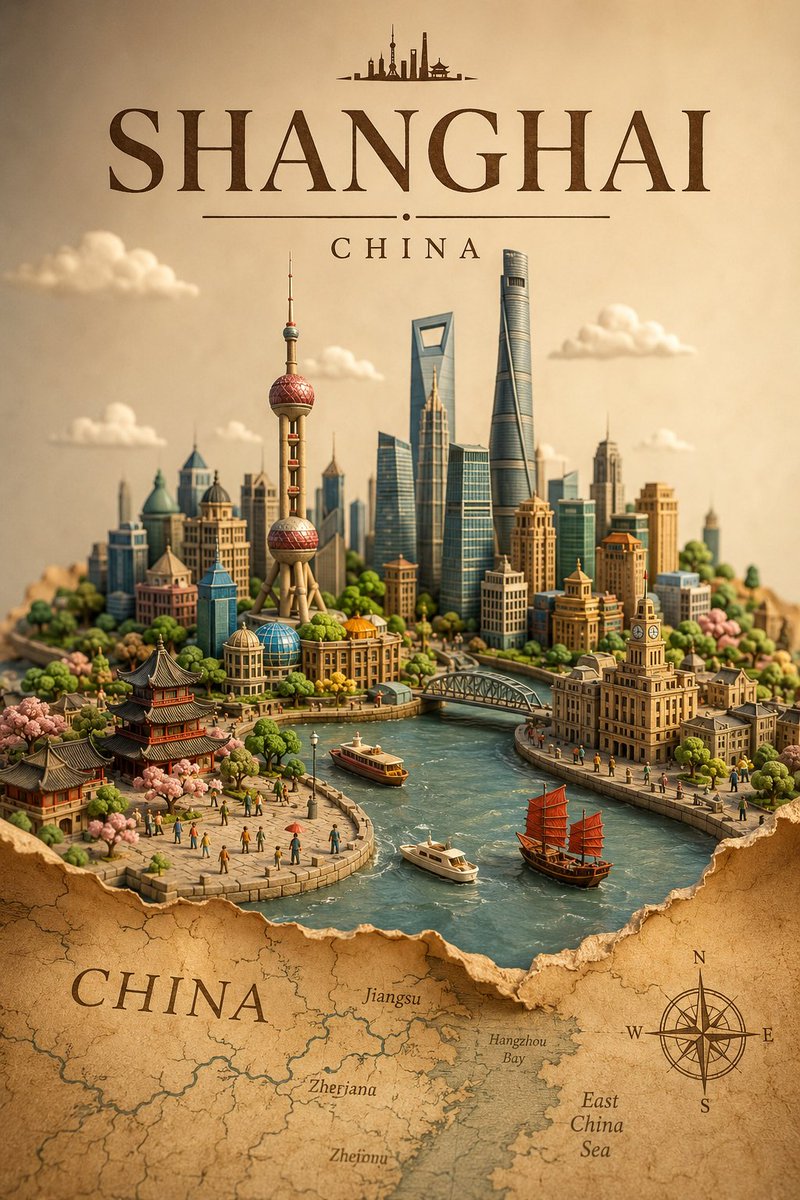
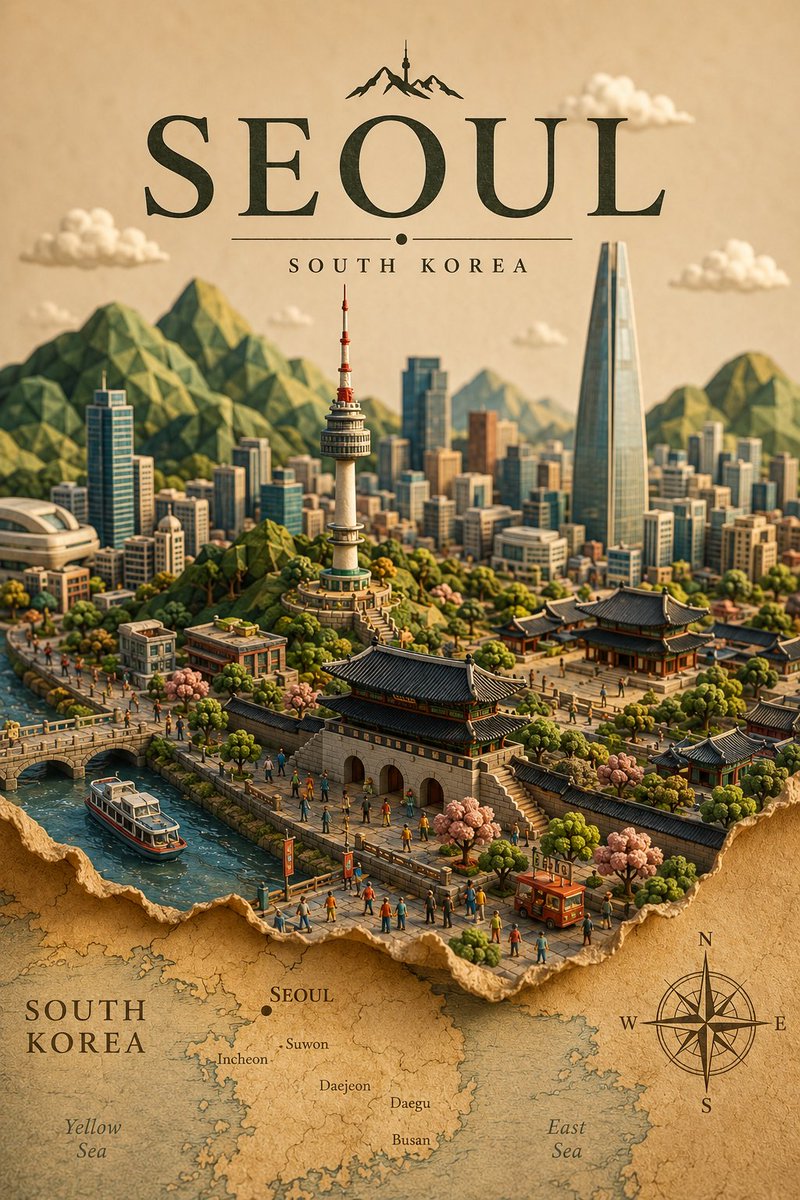
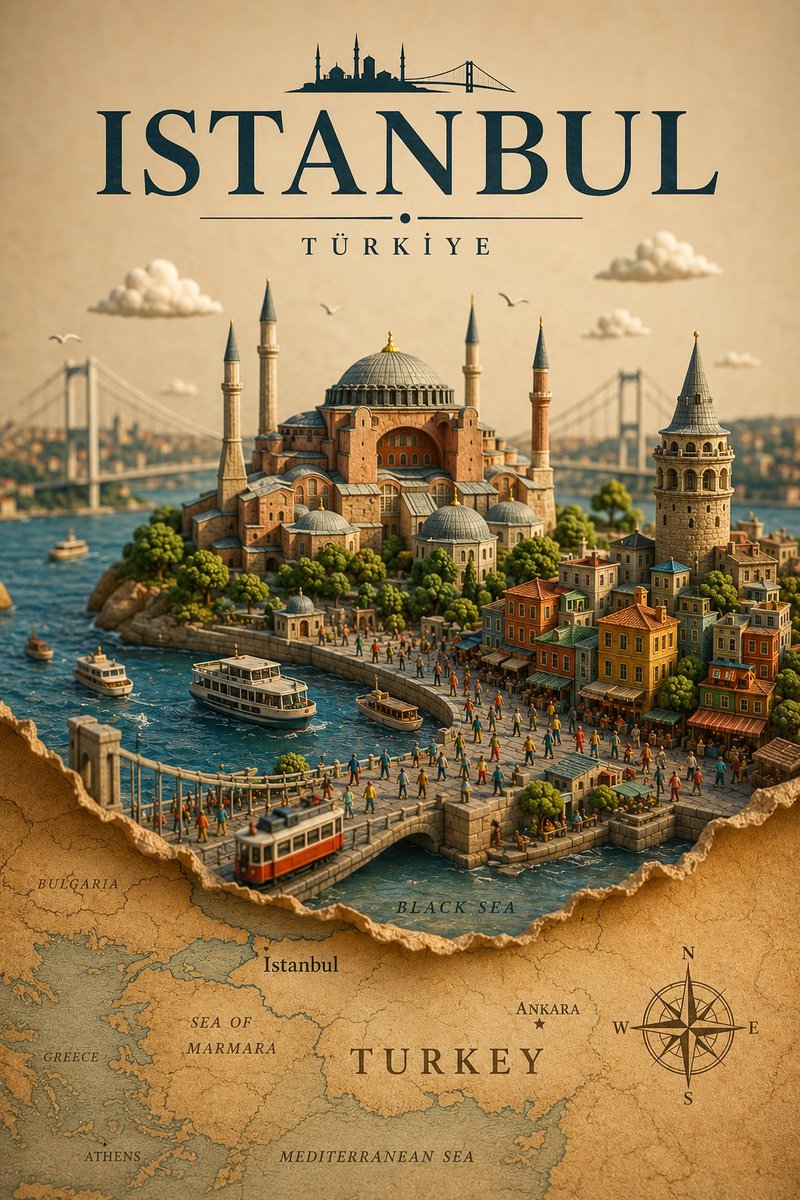
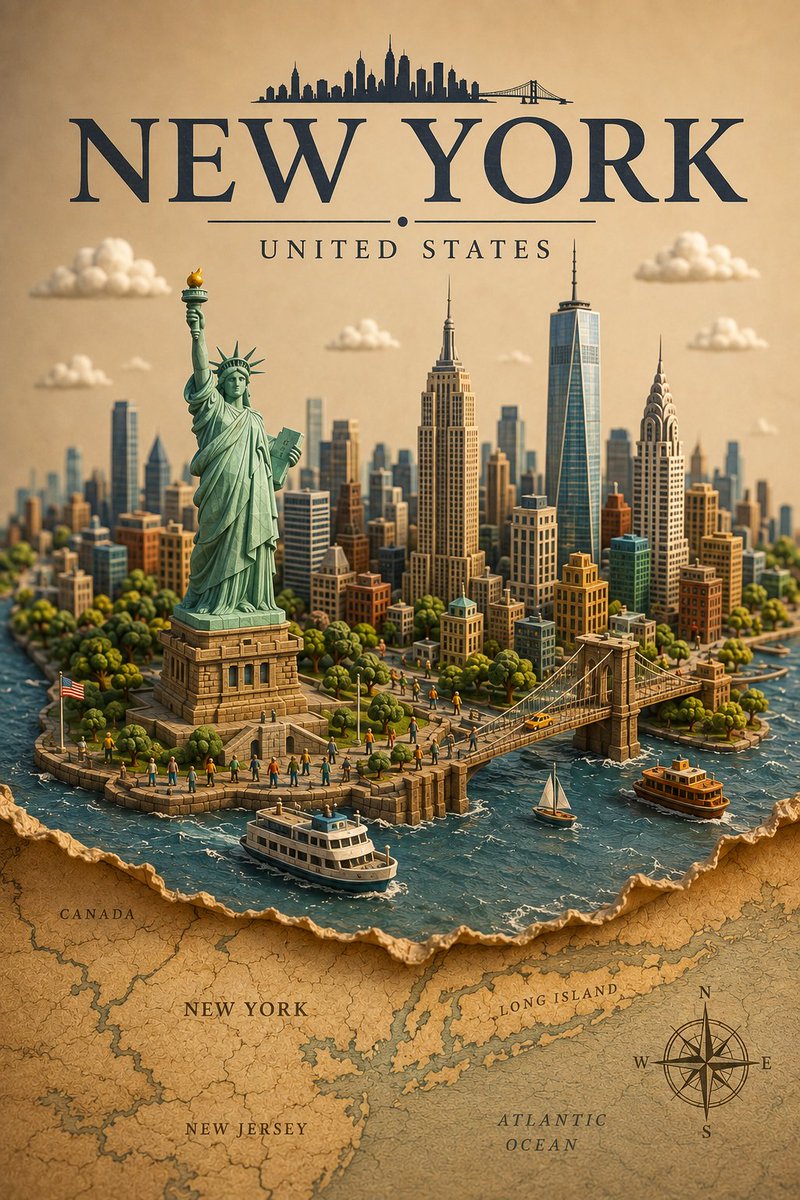
Clay Diorama Rising From Torn Antique Map
Low-poly terrain meets hand-sculpted plasticine trees and clouds, all emerging from a curling torn map scrap complete with compass rose and place names.
Prompt
Location: "[Banff National Park]"
Create a premium vertical travel-poster illustration of this location in a distinctive mixed-media low-poly 3D plus handcrafted plasticine / clay diorama style. Aspect ratio [2:3 vertical].
MAIN SCENE
Transform the location into a highly detailed miniature world emerging from a torn antique geographical map. Make the destination instantly recognizable and geographically accurate. Include its most iconic features: the primary landmark or natural attraction; characteristic mountains, cliffs, valleys, forests, rivers, waterfalls, coastline, architecture or terrain; local vegetation and environmental details; scale-appropriate visitors, hikers, boats, animals or vehicles; and authentic local architectural elements where relevant.
VISUAL STYLE
Combine low-poly 3D geometry for terrain, mountains, rocks, cliffs, buildings and structures with hand-sculpted plasticine clay for vegetation, clouds, people, animals, flowers and smaller details. Show subtle fingerprints, rounded clay forms, handcrafted imperfections, polygonal facets, realistic physical materials, cinematic depth, atmospheric perspective and the premium feel of a collectible stop-motion miniature diorama.
POSTER COMPOSITION
Use a clean, elegant travel-poster layout with the title "[Banff National Park]" and beneath it "[Alberta, Canada]". Place the title prominently at the top in sophisticated serif typography, with a small minimalist mountain or destination icon above it and a thin decorative line below. Keep the miniature landscape as the main visual focus across the centre and lower portion.
At the bottom, integrate a torn piece of antique map paper featuring the country name, nearby geographic locations, relevant seas, rivers, mountains or regions, a small compass rose and subtle authentic cartographic markings. The torn map should naturally curl upward around the miniature landscape, creating the illusion that the location is physically emerging from the map.
COLOUR & LIGHTING
Use a sophisticated natural palette appropriate to the location, with rich greens, earthy stone tones, natural water colours, atmospheric blues and warm parchment. Use [soft cinematic golden-hour lighting], gentle shadows, realistic ambient occlusion, subtle volumetric atmosphere and warm highlights across the miniature surfaces.
IMPORTANT
Keep the landmark recognizable, geographically believable and specific to the location. Avoid generic scenery, excessive fantasy, incorrect geography, random architecture or unrelated tourist attractions. Maintain a clean, premium editorial composition with clearly readable typography and the landscape as the dominant visual focus.